Sunday, 4 January 2015

What Is the Proper Grip Pressure in Golf?


'How you apply your hands to the golf club directly influences your consistency and control'

From the time a golfer picks up his first club, he is taught that having the proper grip is important to consistent ball-striking--creating both power and accuracy. The emphasis is often placed on the correct positioning of the right and left hands on the club so that the hands work together as a unit. While that is important, grip pressure is also a key, but sometimes overlooked, consideration.

Effect on Ball Flight

In his book “My Golden Lessons” Jack Nicklaus suggests that golfers who suffer from a chronic slice--a ball flight that goes from left to right rather than straight--may be holding the club too tightly with the right hand. As the club head nears the ball, this tight grip pressure prevents the proper release or rotation of the hands. At impact, the club face remains open, aimed to the right, and the shot is likely to bend from left to right more than the golfer would want. Even reducing grip pressure slightly can allow the golfer to have the proper release required to straighten out his shots.

Effect on Length

Gripping the club too tightly can prevent a golfer from generating maximum club head speed, resulting in lost power and reduced shot distance. Overly tight grip pressure causes tension to build in the forearms and shoulders, which can restrict the golfer’s swing arc. Make sure your grip pressure is firm but not too tight, and that your shoulders are relaxed prior to beginning your swing.

Where to Apply Pressure

On the left hand, grip pressure is primarily applied through the last three fingers. With the right hand, apply most of the pressure through the ring and middle finger. Golf legend Arnold Palmer, in his Golf Digest article “Try My Timeless Tips,” recommends a drill to strengthen the last three fingers of the left hand using a piece of equipment most people come in contact with every day--their car steering wheel. Palmer suggests squeezing the steering wheel with these fingers very tightly for 10 seconds each time you are in the car.

Finding the Right Pressure

A golfer needs to experiment to find the right grip pressure, allowing her to maintain full control of the club without causing too much tension at address or preventing the full release of the hands through the shot. Major championship winner Fred Couples learned to grip the club so lightly that he sometimes lets his right hand come slightly off the club after he has hit the ball. This light grip pressure contributes to his fluid, powerful golf swing. For most golfers, it is recommended that they do not let go of the club at any point during the swing or follow-through. Your hands shouldn’t slip down the grip as you swing.

Mistakes to Avoid

Don’t hold the club in your palms. A grip with pressure applied from the palms can restrict the mobility of your wrists--cutting down on the power potential of your swing. Avoid letting the right thumb and index finger of your right hand dominate the grip.

[source: golftips.golfsmith.com]

Info: World Golf Leaderboard Update


World Golf Championships Leaderboard
[source: www.worldgolfchampionship.com]


PGA Tour Leaderboard 
[source: www.pgatour.com]


Masters Golf Leaderboard
[source: www.masters.com]


Sport Injury Caused By Golfing

Treating Low Back Pain and Back Injury from Golf


Most acute low back injuries that occur during a game of golf will get better over a couple of days to weeks. The most common injuries from golf include:
  • Muscle strains: typically occurs with rough or forceful golf swings or a sudden shift during the downswing
  • Muscle and tendon attachment: generally occurs due to excessive use, accidents, or swing abnormalities while playing golf
  • Disc injuries: can occur from swinging abnormalities (note that this is usually due to a pre-existing disc lesion that is aggravated by golf)

Low Back Pain Relief from a Golf Injury

For relief of the pain and to promote healing from golf-related injuries and low back pain, it is generally advisable to rest for a day or two, apply heat and/or ice, and take pain medication. Medications like ibuprofen or naproxen can help decrease inflammation, and acetaminophen may be taken in conjunction with these medications to further help reduce low back pain and other types of pain.

Gentle Exercise for Low Back Pain from Golf

It is generally not advisable to further stress inflamed muscles by continuing to play golf through an episode of low back pain. Taking time off from golf will allow the muscles to heal more quickly. Continuing to stretch between golf sessions is advisable, as is continuing a low-impact aerobic exercise program, such as walking for 30 to 40 minutes every other day. After the low back pain has stopped, slowly return to playing golf and apply the prevention tips (described in this article) to help avoid future occurrences.

When to See a Physician for Low Back Pain

If the low back pain continues for more than two to six weeks, a specific and definable problem may be the cause of the back pain and a medical professional should be consulted.

For more details; do read at website:
http://www.spine-health.com/conditions/sports-and-spine-injuries/treating-low-back-pain-and-back-injury-golf


[source: spine-health.com]

Hello 2015!


Monday, 1 December 2014

Golf Course in Malaysia

Malaysia is one of the few destinations in South East Asia where golf remains accessible, unlike Japan and China where demand for golf has pushed green fees sky high. You can enjoy a round of golf surrounded by the cool hills or tea plantations or alternatively head down to the fringes of the South China Sea in this country of over 200 golf courses.
For more details; just view website: http://www.golfasian.com/golf-courses/malaysia-golf-courses/

[source: google]


Golf Trick Shots

The Bryans, George IV and Wesley, are professional golfers who aspire to earn spots on the PGA Tour. In the meantime – their spare time – they have attained at least semi-rockstar status with their trick-short artistry that has gone viral on the Internet.
“Trick shots” is not exactly right. What the Bryans perform in their videos are real golf shots – in a different form. George, who calls himself the set-up guy, gets the ball to his brother in one way or another and Wesley does the rest.

read more >> http://www.thestate.com/2014/11/29/3843551/bryan-brothers-golf-trick-shots.html

Do watch this awesome video!
[source: google]


Read more here: http://www.thestate.com/2014/11/29/3843551/bryan-brothers-golf-trick-shots.html#storylink=cpy

Sumbangan KGUTM Dalam Tabung Endownmen UTM


Kelab Golf UTM telah menyerahkan replika cek kepada Tabung Endownmen UTM sebanyak RM15,000 melalui YDP KGUTM dan YBhg. Datuk Naib Canselor UTM dalam Perhimpunan Bulanan Staf 1 Disember 2014 di Dewan Sultan Iskandar (DSI) UTM pagi tadi.

(source: Secretary KGUTM)

Wednesday, 3 September 2014

The Opening of Driving Range UTM

Info KGUTM:
Please be informed that the opening of the DRIVING RANGE UTM will be held today, 3 September 2014 at 4.45pm.  All members of the club and golfers UTM invited to the ceremony.
Thank you.
[source: Secretary KGUTM]


Tuesday, 7 January 2014

How to make all your short putts

In the video tip below, Golf Professional Pete Harrington introduces a simple putting drill before we go out to play the course. We all played well that day and we made all our short putts. When a simple drill works this well, its worth having a deeper look to examine why.

Watch the video and read why this works so well below, give it a try before your next round, we hope it helps you play your best too..
-WATCH VIDEO- click link below:
http://vimeo.com/33944742

CLUBFACE ALIGNMENT
The most crucial factor in short putts is your clubface angle, its surprising how many of us don’t aim where we think. We then resort to compensating with our swing which means that we need a bad stroke to hole the putt. With this drill, you will visually see your clubface behind the ball in an open or closed position relative to the driver shaft above.

CLUB PATH
Research shows that most golfers do not have their putter moving exactly toward the target on a 1 meter putt. In the drill, you will clearly see if you are swing right or left of your target. You will then be able to make the small corrections in your swing to get the club moving in the right direction.

ANGLE OF ATTACK
To putt our best, we must maintain a wide ark which is created by the movement of the shoulders not the wrist. This motion assures us of striking the ball level not on the upswing or the downswing. If you break your wrist during the drill, the club will rise up and strike the driver shaft above which will let you know instantly that you have used your wrists.

FOLLOW THROUGH
We are often taught to take our putter equal back and through as a pendulum. However, on a short putt, taking the putter back half the length of our follow through gives us a pattern which has more intent. This drill restricts the backswing as your driver club head is in the way, the golfer must accelerate the putter toward the target creating a confident stroke with no apprehension.

AUTHOR: PETER HARRINGTON (PGA)
As head professional at The Golf School Peter has been a PGA professional for 20 years. Peter brings a wealth of experience to the school as its founder and CEO. He is a master at his craft and a great communicator and motivator. Peter began his golfing career playing around with his Dad and it was there that he quickly showed from a young age an enormous amount of natural ability. Peter quickly became a leading Junior and Senior player in the amateur ranks in Queensland and Australia. After turning professional Peter played on the Queensland “troppo tour” winning over 30 Pro-Ams. He played for over 10 years fulltime travelling throughout Asia and Australia.

(source: iseekgolf.com)

Tips For Senior GOLFERS

It’s important to keep playing golf throughout your senior years; golf has huge health benefits, both physically and mentally.
Some golfers play for the challenge of competition and some play for exercise and social interaction.
In a perfect world it would be great to be able to change our bodies to become more golf fit; some golfers will work on becoming stronger and more flexible and some won’t.
Strength and flexibility deteriorates as we age. Old injuries from other sports and arthritis inhibit movement, and many have had some form of major operation.
When a golfer comes to us for help we look to make sure there aren’t any movements in the swing that could cause an injury. We look at the swing to see what kind of ball flight they have and how repetitive the swing is. The swing doesn’t have to be ’textbook perfect’, but it needs to be repetitive with consistent contact to the ball and a consistent shape in the air. We look to see what is causing the biggest problem, and we fix it!
The most common problems we see that affect our senior golfers are: Not warming up, Posture, Balance, Stability, Tempo and Equipment. Here are some tips on how you can improve these areas.

WARM UP

Before you hit off, allow some time to warm up. It is best if you can go for a brisk walk to get the heart rate up a little, maybe a walk to the driving range? Stretch and hit some shots either in the practise nets or on the range. This will help you get your body moving, rather than using the first five holes to warm up and damaging your score!

POSTURE

In very simple terms, as we age our posture changes. We become more curved in the upper part of our back, detrition often occurs in our spine, we can be carrying a bit of extra weight around our tummy and our butt, and our leg muscles aren’t as strong as they used to be.
Some golfers will be able to adapt to improve their golf posture through strength and stretching programs, others will struggle.
Try this simple stretch: stand tall with your arms close to your side, keeping your arms close to your side and your palms facing out, pretend you have a grape between your shoulder blades and try and squash it, drawing your shoulder blades closer together. This is a really nice stretch to help open up the muscles in your chest and shoulder area.

BALANCE AND STABILITY

A good golf swing has a stable base. It is very important to feel balanced throughout the swing. If you take your golf seriously we would strongly recommend you take the time to work on your strength and flexibility. We will always recommend you to go and see your physiotherapist first, tell them that you want to improve your golf and have a screening so that you don’t work on the wrong things. This will help you use your time effectively.
If you don’t wish to exercise to improve your golf or you have injuries that limit what you can do, try this little drill. Balancing on one foot with your other knee flexed in the air try and stay balanced (without wobbling) for 30 seconds (or as long as you can). Swap legs and do the same. One side will always be better or stronger. You can use a wall, golf club or a friend as help until you can balance on your own. When you think you are really good at this, do the same but SHUT your eyes. Wow, what a difference then! Professional golfers generally can balance one legged, eyes shut for 30+ seconds. Many amateurs are lucky to make 5 seconds.
Tempo
The quicker the swing is the harder it is to keep your balance. If you find it hard to keep your balance when you swing, try having a slower three-quarter-length back swing, in other words your hands should be about shoulder high at the top of your back swing. This can help reduce the amount that your body lifts up and down in your swing, allowing you to have better control over your movements and make it easier to keep your balance.

EQUIPMENT

Having the correct equipment is very important. Technology has certainly made golf a lot easier for people with a slower swing speed. High launch drivers and hybrids in particular have allowed much more forgiveness and helped increase the distances hit compared to the older clubs.
We strongly recommend when you buy clubs that you are correctly fitted for them. Your local PGA Professional can help you with this. Alternatively keep an eye out for Demo Days. All major companies have these days (check out the Demo Day Guide in every issue of Inside Golf), they are a great opportunity to speak to an expert about their product and discuss what would be suitable for you.

LOFT

It is important to consider having more lofts in your driver, fairway woods and hybrids. These lofts will vary between golfers depending on their technique. The slower someone’s swing speed is the more loft required to help get the distance.

SHAFT FLEX

There are many golf shafts on the market. Choosing the correct shaft really depends on your swing speed and ball flight. Golf shafts have different weights, flexes and kick points. Senior shafts are generally lighter in weight and more flexible than a men’s regular golf shaft. You can really see a difference in your ball flight when you have the correct shaft to match your swing speed.

LENGTH

If you have back problems and you can’t bend forward into the correct golf posture, having longer clubs will make it much easier for you to strike the ball more consistently. Just make sure you are fitted correctly.

GRIP THICKNESS AND GRIP TYPE

Did you know there are different grips on the market? Rubber, cord, multi compound, junior, Ladies, size 58, 60, midsize, oversize and even Arthritic grips are available. Depending on your palm width and size of your fingers and the feel of the grip, your grip should be fitted to you (just like your clubs). So if you are buying new clubs or just re-gripping the clubs in your bag, ask your local PGA professional which grip is right for you.

Written by Lisa Newling & Loraine Lambert
(Source: iseekgolf.com)

Salam Tahun Baru 2014

As Salam & Salam Sejahtera kepada semua ahli KGUTM & rakan-rakan.
Doa agar kesihatan kita lebih bertambah baik dari tahun sebelumnya dan kehadiran tahun 2014 ini akan memberikan lagi semangat kita dalam melakukan aktiviti golf setiap bulan. 
Sepertimana sedia maklum, wujudnya blog/fb/twitter KGUTM ini adalah untuk memudahkan setiap ahli dalam sebaran maklumat berkenaan aktiviti golf dan apa jua perbincangan serta perkongsian ilmu yang berkaitan. Di samping menggalakan setiap ahli KGUTM untuk hidup secara positif dalam menimba ilmu pengetahuan, berkongsi cerita, menjadi inspirasi, pencetus idea, pandangan mahupun pengalaman seseorang dalam sukan golf.
Semoga ukhwah yang terjalin akan lebih kukuh dan kemahiran dalam sukan golf dapat dipertingkatkan lagi di masa-masa akan datang. Selamat Maju Jaya di tahun 2014!

"Sukan Untuk Kesihatan"
~Admin Y


Monday, 16 December 2013

Info Golf: How to Swing a Driver


Addressing the Ball (Stance)Swinging the Driver (Mechanics)
Edited by Chris, Queenkiwi, Priscilla, AJ
A good tee shot is often the lead-in to a good score on a golf hole. Being able to swing a driver well enough to get good distance on a tee shot reduces the number of shots needed to hit the ball onto the putting green and the amount of time spent on the fairway and in the rough. A good golf swing is part stance and part mechanics. Follow the steps listed below to learn how to swing a driver more effectively on the golf course.

EditMethod 1 of 2: Addressing the Ball (Stance)

  1. 1
    Line up with one side of your body facing the putting green. If you're right-handed and using right-handed clubs, the left side of your body, particularly your shoulder, should point toward the green. If you're left-handed and using left-handed clubs, the right side of your body should point toward the green.
    • The side of your body closer to the green is your front side (front arm, front shoulder, front leg), while the side away from the green is your rear side (rear arm, rear shoulder, rear leg).
  2. 2
    Position yourself correctly with respect to the tee. You should stand so that the ball is ahead of your head. Standing so the ball is even with your head ("on top of the ball") or behind it will cut into your distance and make it more likely that your driver will strike the ground before it strikes the ball.
  3. 3
    Spread your legs fairly wide apart, with your knees slightly bent. Your feet should be wide enough apart that the distance between the outside edges of your feet is greater than the distance between the tips of your shoulder blades, with the ball parallel with the inside heel of your front leg. The wider your stance, the wider an arc you can swing a driver in.
  4. 4
    Grip the driver firmly but naturally. There are 3 ways you can grip a golf club: interlock, overlap and 10-finger grip. Most beginning golfers should probably use either the overlap or interlock grip, with the rear hand lower on the grip than the forward hand. Hold the club so that your hands aren't pressed forward or gripping it at an odd angle behind the club head. You want to have the club face strike the ball squarely instead of at an angle that will cause the ball to veer left or right.
  5. 5
    Tilt your spine to raise your forward shoulder higher than your rear shoulder.Your forward shoulder should be about the same height above your rear shoulder as your forward hand is above your rear hand at the club grip. As you lift your shoulder upward, you should shift more of your weight toward your rear leg.
    • If you have trouble maintaining the proper angle with your shoulders, briefly remove your rear hand from the grip and briefly put it behind your rear knee. This will automatically lower your rear shoulder. You can then put it back on the driver grip again.
    • Following these steps successfully will cause the head of your driver to strike the ball at a shallow angle and lift it off the tee. Because the tee raises the ball off the ground, you don't need to hit the ball with a downward stroke as you do with an iron or wedge on or off the fairway.

EditMethod 2 of 2: Swinging the Driver (Mechanics)

  1. 1
    Push the club head away from you at a low angle. Keep your hands in position on the grip and your feet flat. Your leading arm should remain straight on the back swing so that you don't have to remember to straighten it out again on the downswing.
  2. 2
    Swing the driver downward again in a smooth stroke. Keep your feet flat and your body straight as you bring the club downward to connect with the ball. The goal is not to hit the ball as hard as you can, but to swing smoothly through the ball.
  3. 3
    Keep your arms extended as you swing. During the downswing, your arms should be as straight as the rest of your body.
  4. 4
    Lift and turn your rear foot after you hit the ball, not before. Doing it this way will cause the ball to fly straighter and farther than if you turn first. Turning your body before you hit will cause you to slice the ball.
  5. 5
    Follow through by folding your front elbow and crossing your rear forearm over your front forearm. This will increase the speed of your driver's head.
    • To help you make this part of the upswing, envision your forward arm and the driver's shaft forming a capital "L" and your forearms making an "X" as they cross
    • Keep as relaxed a motion through the takeaway, downswing and upswing as you can. Tensing up will cause the ball to veer left or right.

EditTips

  • Practice your swing regularly on the driving range, off the course without a ball and indoors during the winter without either club or ball. Practice making the movements until they become almost second nature, and get in the habit of envisioning your swing before you make it.

EditWarnings

  • Be aware that even with regular play, regular practice and envisioning your swing, you will go through periods where your swing is off. It happens to professional golfers, too, and not just when their personal lives are in turmoil.

Sunday, 24 November 2013

Info KGUTM;


Info KGUTM: Mesyuarat Agung Tahunan Kelab Golf UTM Kali ke-2 2013

Ribuan terima kasih diucapkan atas kehadiran ahli-ahli KGUTM & Bersekutu dalam Mesyuarat Agung Tahunan KGUTM 2013 jam 9.30 pagi tadi yang telah dipengerusikan oleh Yg. Dipertua KGUTM iaitu Prof. Ir. Dr. Mohd. Azraai bin Kassim. Pihak kami dimaklumkan kebanyakkan ahli yang lain tidak dapat hadir disebabkan kekangan kerja, jemputan majlis perkahwinan, bercuti bersama keluarga (luar negeri Johor, cuti sekolah) dan lain2. 
Kerjasama dan perhatian YBhg. Dato'/Prof./Prof. Madya/Dr./tuan amat dihargai dan didahului dengan ucapan ribuan terima kasih.
Semoga kita berjumpa lagi di AGM akan datang, in shaa Allah.

"Sukan Untuk Kesihatan"
~Admin Y

Thursday, 17 October 2013

Golf Info: Ukuran Lubang GOLF

Tahukah anda berapa ukuran Lubang golf sebenarnya? Ketika anda bermain golf dan saat melakukan putting, kita sangat berharap agar lubang (hole) golf dapat berubah menjadi ukuran besar sehingga jika lubang lebih besar, tentunya bola golf akan lebih mudah masuk ke hole. Tapi diameter hole (lubang) 10,79 sentimeter itulah standard yang digunakan di padang golf mana pun.  Seperti banyak hal dalam olahraga golf, standard ukuran lubang itu atas kesepakatan yang dibuat oleh The Royal and Ancient Golf Club of St Andrews, dibantu oleh Musselburgh.


Pada 1891, R&A memutuskan memberikan standard baku besarnya lubang di padang golf di mana pun. Melalui perdebatan yang cukup hebat, akhirnya telah mencapai persetujuan diameter lubang golf adalah 10,79 sentimeter.
Pada 1829, para pegolf di Musselburgh sudah menggunakan lubang dengan diameter 10,79 sentimeter dan itu adalah ukuran pertama yang dikenal.
Lantaran dengan ukuran diameter tersebut permainan menjadi lebih menantang, para pemain golf di R&A akhirnya setuju mengadopsi ukuran itu dan mulai memperkenalkannya pada 1891. Dan padang golf di seluruh dunia akhirnya mengikuti “aturan” tersebut.
(Sumber: Akhbar empo, 7 Mei 2006) ~ mata-melotot69.blogspot.com

Info Golf: How To Get Backspin

Monday, 14 October 2013

Teknik Memegang Kayu Golf

Salam rakan-rakan golfers;
Untuk kali nie saya nak kongsikan sedikit tentang 3 teknik asas memegang kayu golf (golf grips).
Teknik-teknik asas yang selalu digunakan adalah Ten Fingger GripInterlock Gripdan Vardon Overlap Grip.
Anda boleh memilih salah satu dari 3 teknik asas tersebut. Tiada teknik yang terbaik, cuma anda perlu dapatkan grip yang paling anda rasa selesa dan sesuai. Itu sahaja.
Teknik Asas Memegang Kayu Golf
Untuk pandangan hadapan, cuba berdiri dan lihat di hadapan cermin kemudian bandingkan dengan gambar di bawah. Cuba sebaik mungkin untuk menyamai gambar yang pertama (neutral).
pandangan dari hadapan golf grip
Namun, sekiranya kawan-kawan pergi ke driving range berdekatan, dan cuba bertanya tips daripada golfer bersebelahan tentang teknik memegang kayu golf. Kawan-kawan pasti akan terperanjat kerana ada 1001 cara memegang kayu golf yang akan diajar oleh mereka.
Nasihat saya, tak perlu pening kepala, pilih antara 3 jenis grip asas di atas yang kawan-kawan rasa selesa, then just stick to it.
[sumber: malaysiangolfer.org]

Kenali Kayu GOLF anda


Stick golf atau club, terdiri dari 3 jenis utama:
1) wood untuk pukulan jauh, termasuk driver (wood no 1) untuk keperluan tee-shot;
2) iron untuk pukulan di area green (tempat hole); 
3) putter untuk keperluan membuat goal memasukkan bola di green

Satu set kayu golf yang dimiliki oleh pemain dalam beg golf biasanya mengandungi 14 buah (maksima) seperti berikut:

- 3 wood : No.1 (biasa disebut driver, pukulan pertama), no 3 dan 5.
- 7 iron: No. 3 - 9
- 1 iron pitching wedge : untuk jarak dekat
- 1 iron sand wedge : untuk di pasir
- 1 putter : untuk putting di green.

Ketiga-tiga jenis kayu tersebut memiliki bentuk dan ukuran yang berbeza.


Wood

Jenis pertama dari klub golf adalah wood. Head klub golf ini pada awalnya diperbuat daripada kayu namun kini ianya dilengkapi dengan bahan dariapada logam berongga, titanium atau besi.Klub golf wood dirancang untuk menghasilkan jarak terbesar dengan setiap stroke. Dari 14 klub dalam satu set biasa, separuh daripada woods akan digunakan sepanjang permainan (9 @ 18 holes).

Klub golf wood biasanya digunakan pada pukulan lurus dan panjang ke lapangan golf, karena karakternya memungkinkan untuk jarak jauh.

Kekerapan anda dalam rutin latihan boleh memastikan supaya pukulan lurus dalam lapangan. Woods juga klub-klub terpanjang di dalam set golf anda.


Iron

Klub golf yang berikutnya adalah irons yang merupakan klub golf yang paling sering digunakan dalam permainan golf.

Irons jauh lebih fleksibel jika dibandingkan dengan 2 jenis klub yang lain sehingga jenis klub ini biasanya selalu dalam jumlah yang terbanyak dari klub di yang ada di dalam beg golfers.

Irons masih boleh mencapai jarak yang cukup besar namun ianya tidak sejauh woods. Semuanya bergantung dari material besi yang anda gunakan,Anda masih boleh meningkatkan pukulan yang jauh lebih tinggi dan memukul bola anda sesuai dengan jarak yang anda inginkan.


Iron biasanya dimulai dari no 3 sd 9 plus P (Pitching), Iron 3 yang paling panjang shaftnya dan memiliki sudut kemiringan permukaan yang kecil, makin besar nomor ironnya makin pendek shaftnya dan memiliki sudut kemiringan permukaan yang makin besar.


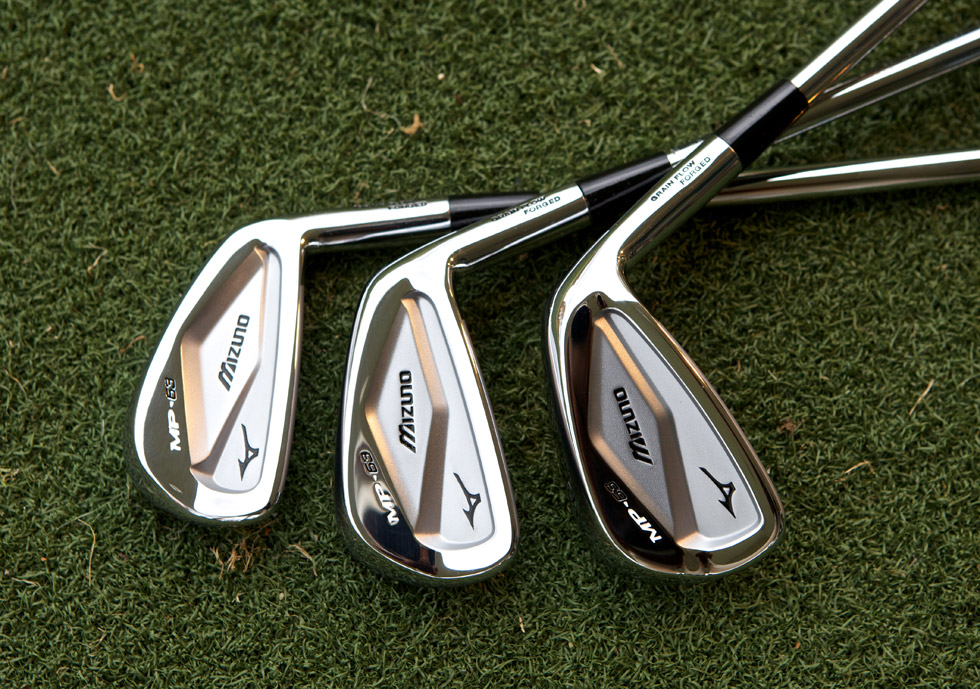
Ada banyak jenis irons yang memiliki fungsi yang lebih spesifik, misalnya SW Sand Wedges yang memudahkan untuk keluar dari bunker pasir atau Wedges dengan ukuran 52 , 54, 56 , 60 darjah yang digunakan untuk melakukan lob bola agar melambung jatuh di green tidak meluncur, bahkan dengan teknik tertentu bolanya boleh memiliki backspin yang tinggi dan mendarat dengan baik di green.

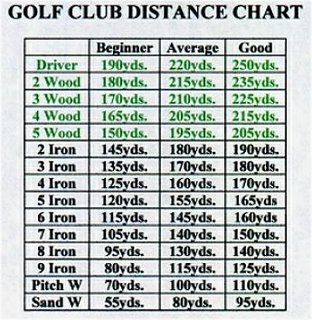
Berikut gambaran rata-rata jarak pukulan menggunakan wood dan iron:


Putter

Jenis klub yang terakhir adalah klub golf putter, dan terdapat hanya satu putter sahaja di dalam beg golf.

Jenis klub ini biasanya digunakan pada putting green pukulan akhir ke lubang yang memerlukan pukulan yang halus.

Jenis klub putter dirancang khusus untuk menjadi klub dengan pukulan yang sangat tinggi dan jarak yang paling pendek yang biasanya hanya mempunyai jarak beberapa meter dari lubang.

Bola yang dipukul menggunakan putters tidak bertujuan untuk terbang di udara namun sebaliknya putters hanya mendorong ringan di tanah di mana bola akan bergolek dengan lembut ke dalam lubang.

Puting ini adalah bahagian yang paling penting dalam permainan golf, latihan yang banyak diperlukan bagi mendapatkan putter yang bagus.

3 jenis klub di atas merupakan perlengkapan dasar untuk permainan golf.

Pembelajaran berterusan dengan hadir di lapangan driving range kerana kekerapan berlatih boleh memahirkan anda menggunakan irons atau wood, dan juga memahami karakter dari klub tersebut lebih mendalam lagi.

[sumber:  mengenalgolf.blogspot.com ~ diolah semula ke Bahasa Malaysia]